Workshop: New technologies can save lives and increase society’s capacity for disasters
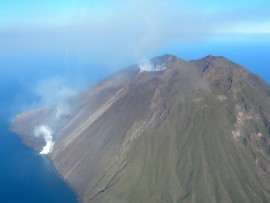
From May 30 to June 2, 2012, sixty risk management experts from Europe, the Mediterranean, and the Balkans gathered on the island of Stromboli (Italy) to focus on establishing an effective tsunami early warning system for the Mediterranean Sea, alerting at-risk populations and communicating appropriate self-protection measures.
The EU-funded South Programme organized a workshop in collaboration with UNESCO’s Intergovernmental Oceanographic Commission (IOC) in one of the Mediterranean’s most vulnerable tsunami coastal areas. For four days, representatives from civil protection authorities in the Programme’s partner countries, the Italian Civil Protection Agency, the European Commission, the International Olympic Committee, UNESCO, three Italian research institutes, and five Italian regions among the most vulnerable to tsunami danger, as well as local municipalities, reviewed the state of the Mediterranean Tsunami Early Warning and Mitigation System (NEAMTWS), including organizational arrangements, current and future activities, tsunami detection technologies, and warning deployment procedures.
Franco Gabrielli, Head of the Italian Civil Protection Department, welcomed the participants, along with Peter Alvaro, Deputy Head of the Crisis Response Unit at the European Commission’s DG ECHO, Francesca Santoro of the International Olympic Committee and UNESCO, and Pier Luigi Soddu, Executive Director of the PPRD.
During the workshop, participants will learn how, through a regional network of scientific institutes, NEAMTWS can now detect earthquakes or submarine landslides that could trigger tsunamis. NEAMTWS is also capable of identifying potential tsunami impact zones, predicting their spread and time of arrival on the coast, and ultimately transmitting a tsunami warning to national authorities. Participants will assess the feasibility of exchanging data at the sea level that can confirm a tsunami and provide information on its spread. All of this is considered in light of the short distances tsunami waves travel in the Mediterranean Sea, which hinders accurate prediction before issuing an alert.
Risk management experts will demonstrate their countries’ capacity to disseminate timely warning messages to at-risk populations, as well as the procedures designed to ensure that those at risk know how to act upon receiving a warning.
Tsunamis are statistically more frequent in the Mediterranean Sea than in the Indian Ocean, and over the centuries they have caused serious damage and loss of life. According to the European Environment Agency, the region has experienced 200 tsunamis in the last 500 years, and the University of Bologna recently indicated that Italy has experienced an average of 15 tsunamis every 100 years over the last four centuries. Recorded tsunamis in the Mediterranean have occurred mainly in the most seismically and volcanically active areas, such as the Aegean, Ionian, and Tyrrhenian Seas, and along the Algerian and Cypriot coasts.
The risk of loss of life and economic disaster in the Mediterranean region is high due to the high population density along its coastlines: approximately 150 million people are concentrated along 46,000 kilometers of coastline, including 110 million who live in coastal cities, and around 200 million tourists annually.
To all this, the risk of tsunamis must be given greater consideration in land-use planning policies throughout the region.
Major research institutions in the Euro-Mediterranean region attended a meeting with the International Olympic Committee (IOC) and UNESCO following the devastating Indian Ocean tsunami of December 26, 2004. This meeting was responsible for coordinating the establishment of the Mediterranean Tsunami Early Warning System. The European Union supports the IOC and UNESCO efforts by funding the NEAMTWS Tsunami Mitigation Project Centre (NEAMTIC), which works to improve the circulation of best practices for reducing tsunami risks in the region, raise awareness among vulnerable populations, and strengthen ties between the IOC and the EU Civil Protection Mechanism.