Earthquake Risk
The Earth has been shaking daily since time immemorial, and it will not stop doing so due to what its geophysical composition imposes on it.
In fact, it is not everywhere and in the same way, nor in all countries, nor in all regions.
The earthquake risk is greater, especially along some well-known faults.Algeria, a country at high seismic risk.
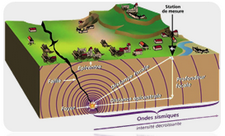
An earthquake is a sudden tremor that occurs deep within the Earth and travels to the surface in two types of vibrations: horizontal and vertical.
The main tremor is always followed by secondary tremors called aftershocks.
These disturbances in the Earth’s crust are very destructive.
We must remain cautious and aware that this danger exists and an earthquake could occur at any moment
Don’t forget that fear does not keep danger away
By following simple behaviors, you can protect and save yourselves, as well as save those to whom you will teach these preventive actions.
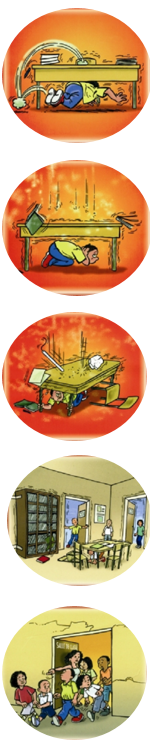
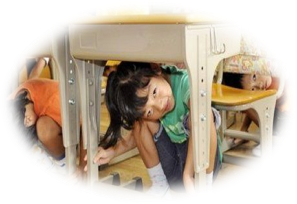
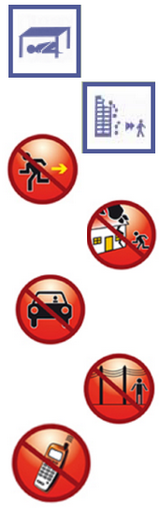
Don’t rush out
The shelter under the table is sturdy and protects yourself from falling objects
Abroad:
If you are in the car, stop on the side of the road, away from bridges and buildings.
If you are on the street, stay away from buildings, trees and power poles.

After the earthquake
Shutting down water, electricity and gas supplies.
Listen to the radio and follow the broadcast instructions.
Evacuate the building and take survival gear.
Do not use the elevator.
Only use your vehicle when absolutely necessary.
Staying away from beaches is a tsunami risk.
Do not use the phone except in an urgent situation

The most important thing is to stay calm.
In the event of an earthquake, do not run or panic, as this could spread fear to your classmates.
Take cover under a desk (the ceiling could collapse on you).
At the same time, listen to your teacher’s instructions. They should be positioned under the door frame to open it.
(This way, the corridor will remain clear, even if the ceiling collapses.)
When the shaking stops, follow the two students designated by the teacher to lead the class out.
Leave the classroom calmly with your classmates on foot!
If there are aftershocks in the corridor and there is nothing to take cover behind, then… press yourself against the wall!
This should also be followed on the stairs.
Once you are outside the building, move away from it and head towards the meeting point in the courtyard.
Sit on the ground with your classmates so you can stay together and allow the teacher to call out names of missing students.
Wait for the ambulance to arrive.
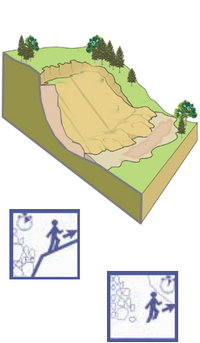
Landslides typically occur on slopes when the predisposing factors (the nature of the geological layers, erosion caused by water and human activity) weaken the soil and overcome the resistance to slippage (cohesion and friction). The collapse may occur suddenly, in stages, or over extended periods.
In plains: collapses of natural or artificial underground cavities (mines and quarries).
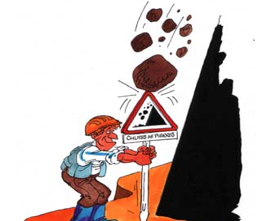
In mountainous regions: collapses of unstable soil layers and rockfalls.
In coastal regions: landslides and coastal erosion.
how to proceed
Move sideways.
Move to higher ground.
Do not move backwards.
Any new cracks, fissures, or cracks that you notice should be reported to the relevant authorities for regular monitoring.
Conserve water and avoid wasting it.